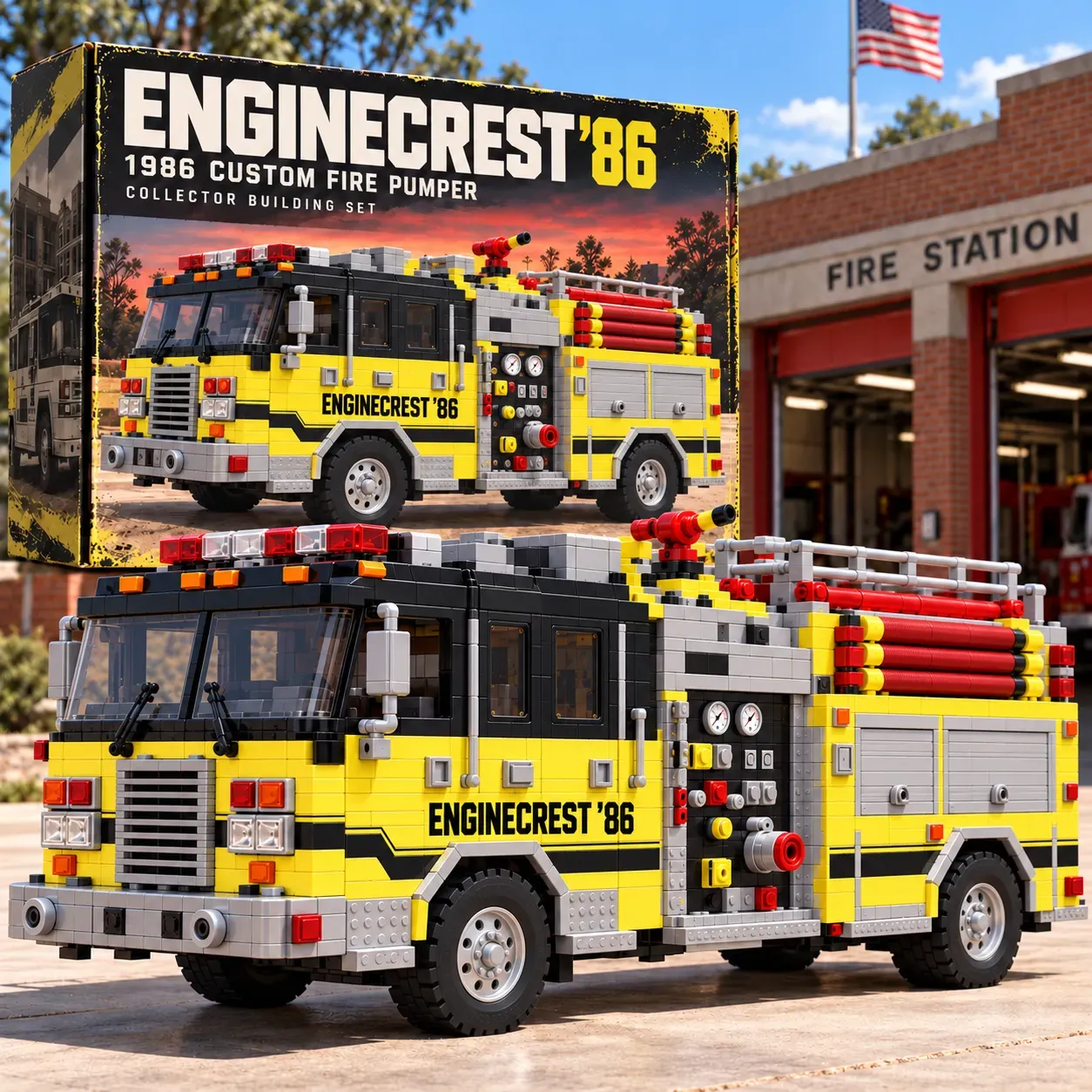
01 / BUILD
Solve the Working Side
Build the cabover front, then shift to the gauge-filled operator controls where the truck's side becomes noticeably more technical.

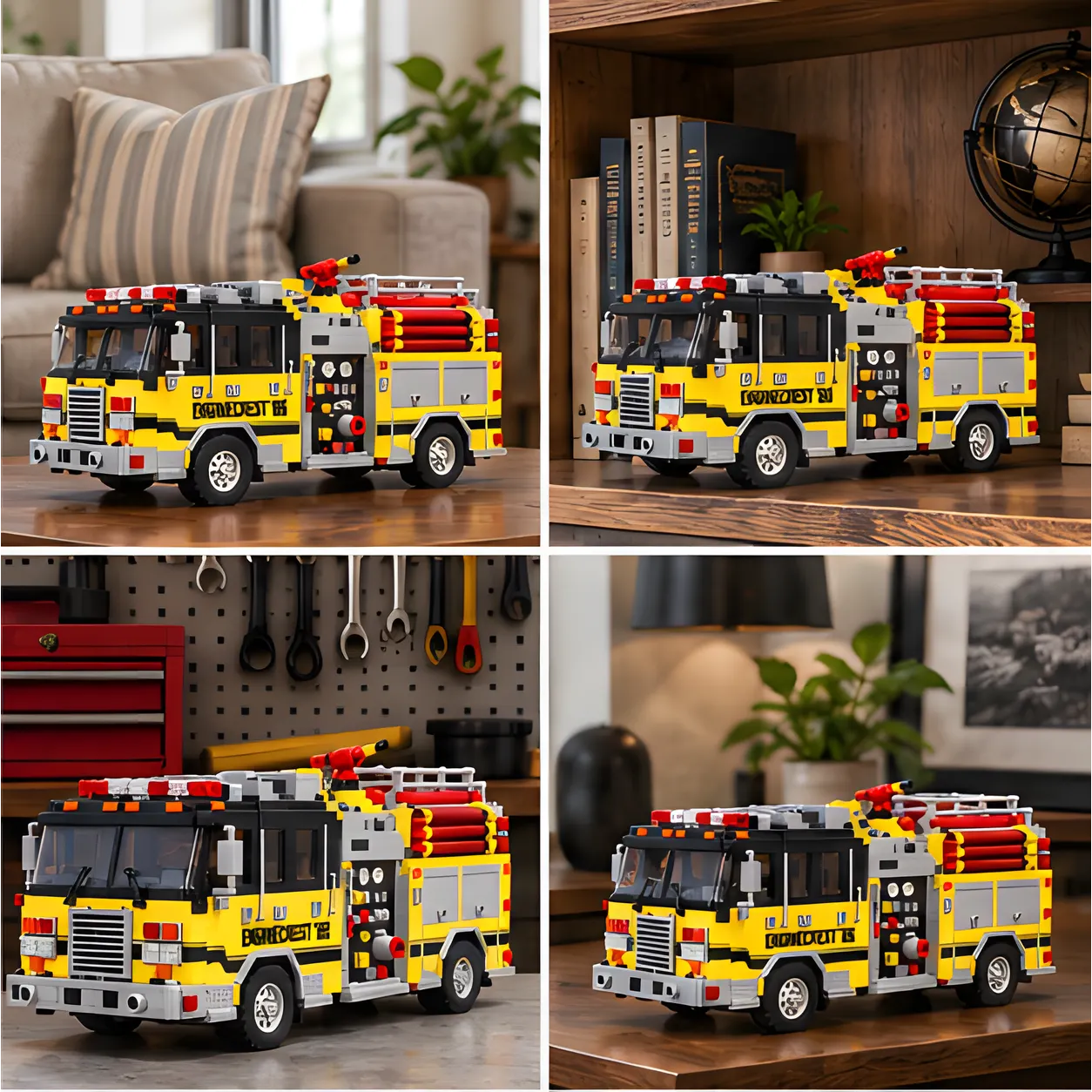


Mid-'80s American Pumper
American fire apparatus of the mid-1980s sat at a crossroads: squared custom cabs were evolving quickly, while high-visibility yellow paint still echoed a visibility debate that had shaped many fleets in the prior decade. Pumpers were defined visually by pump controls, hose storage, and water-delivery hardware.
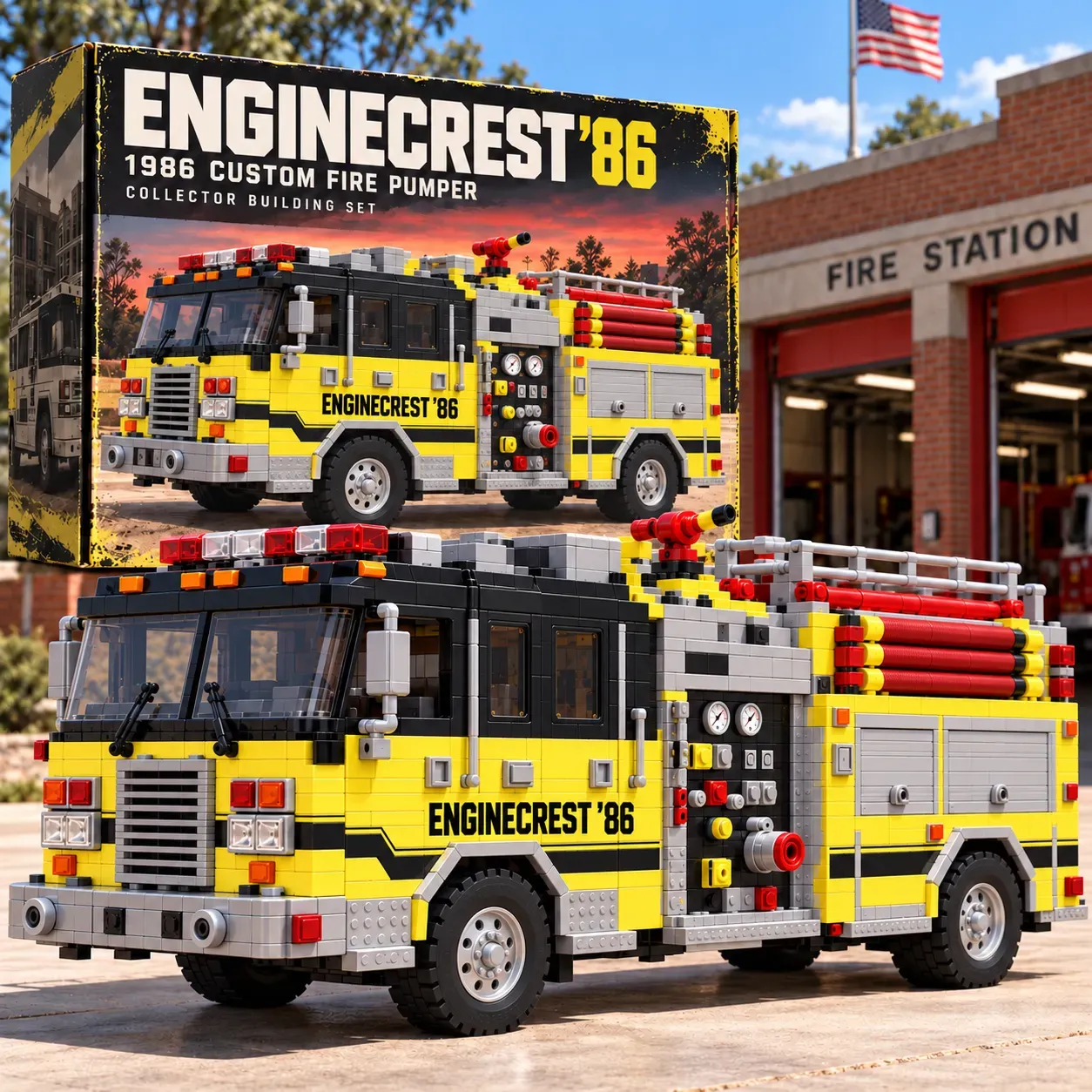
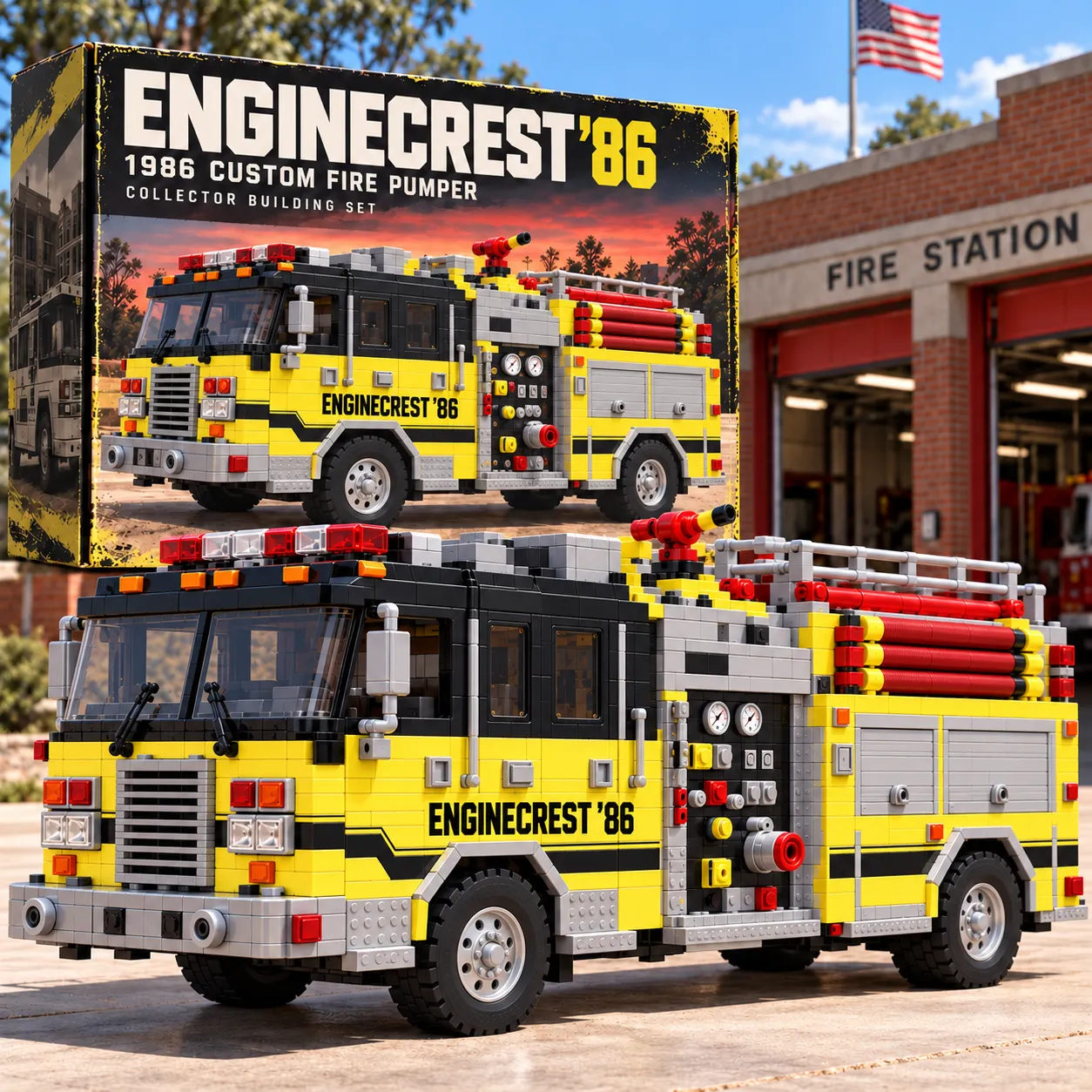
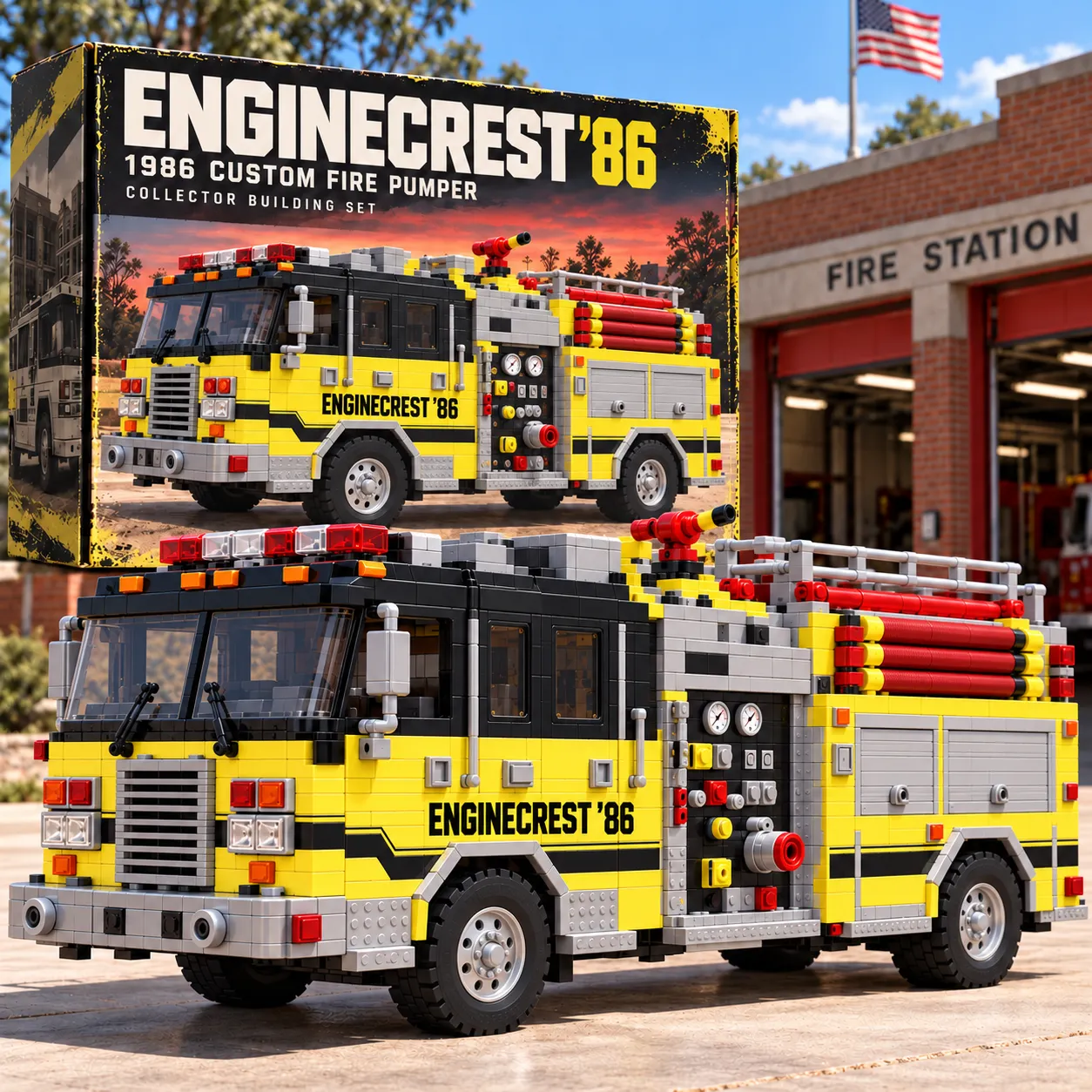
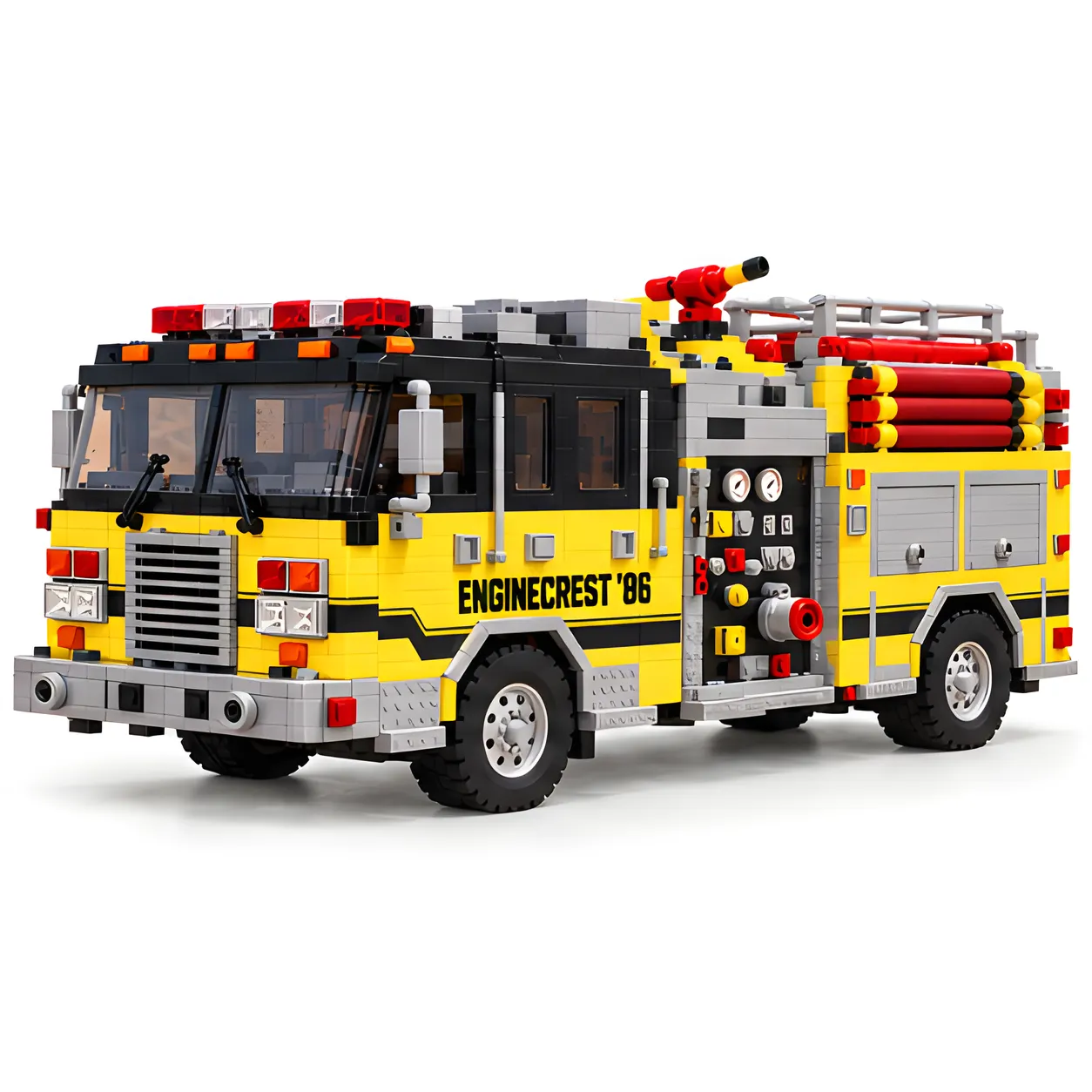
This set translates that era into a hands-on project with a yellow-and-black cab, layered front grille, square lamps, a gauge-filled operator panel, stacked red hose sections, silver rails, and a top-mounted water monitor. It suits adult fire-service enthusiasts, truck collectors, and builders who enjoy finishing a recognizable working-vehicle shape piece by piece.
A working-truck story, finished by hand
Period Pumper Character
Its strongest cues come from real pumper architecture: a squared cabover nose, visible water-control hardware, rear hose storage, and the sharp contrast of yellow, black, gray, and red.
Why This Rig Feels Different
Spotting a bright yellow pumper outside a station can raise a simple question: why does it look so different from the red engines most people expect? In North America, lime-yellow apparatus became part of a real visibility debate, giving this color scheme a period-specific story before the first brick is placed.
Here, that interest becomes a project. The broad cabover grille establishes the front, the gauge-packed water-control area adds mechanical character, and the rear hose stack plus upper water monitor finish the working-pumper profile. By the end, the subject has moved from something you noticed to something you built and chose to keep in view.
The history starts with color; the build earns its place through detail.
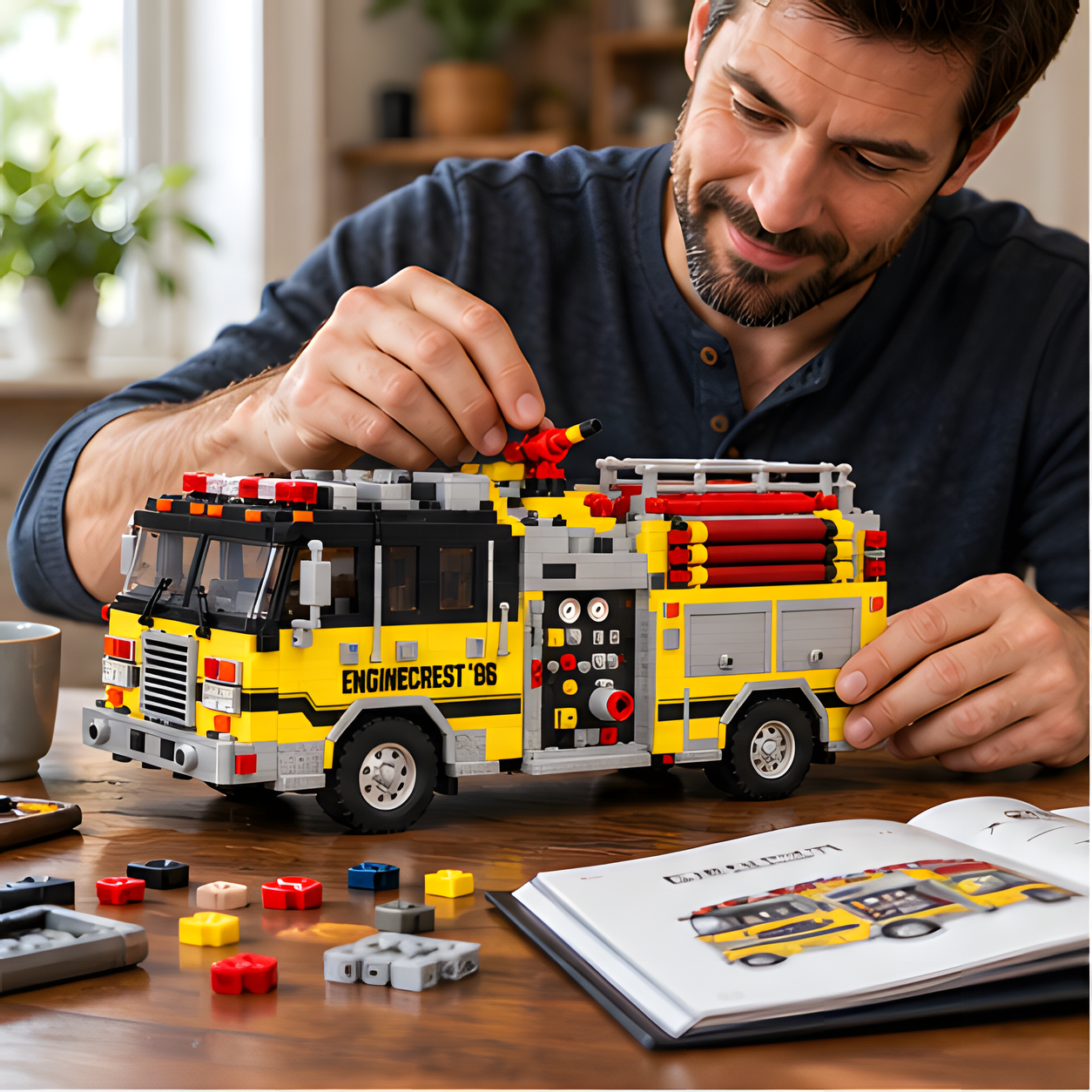
Make Room at the Table
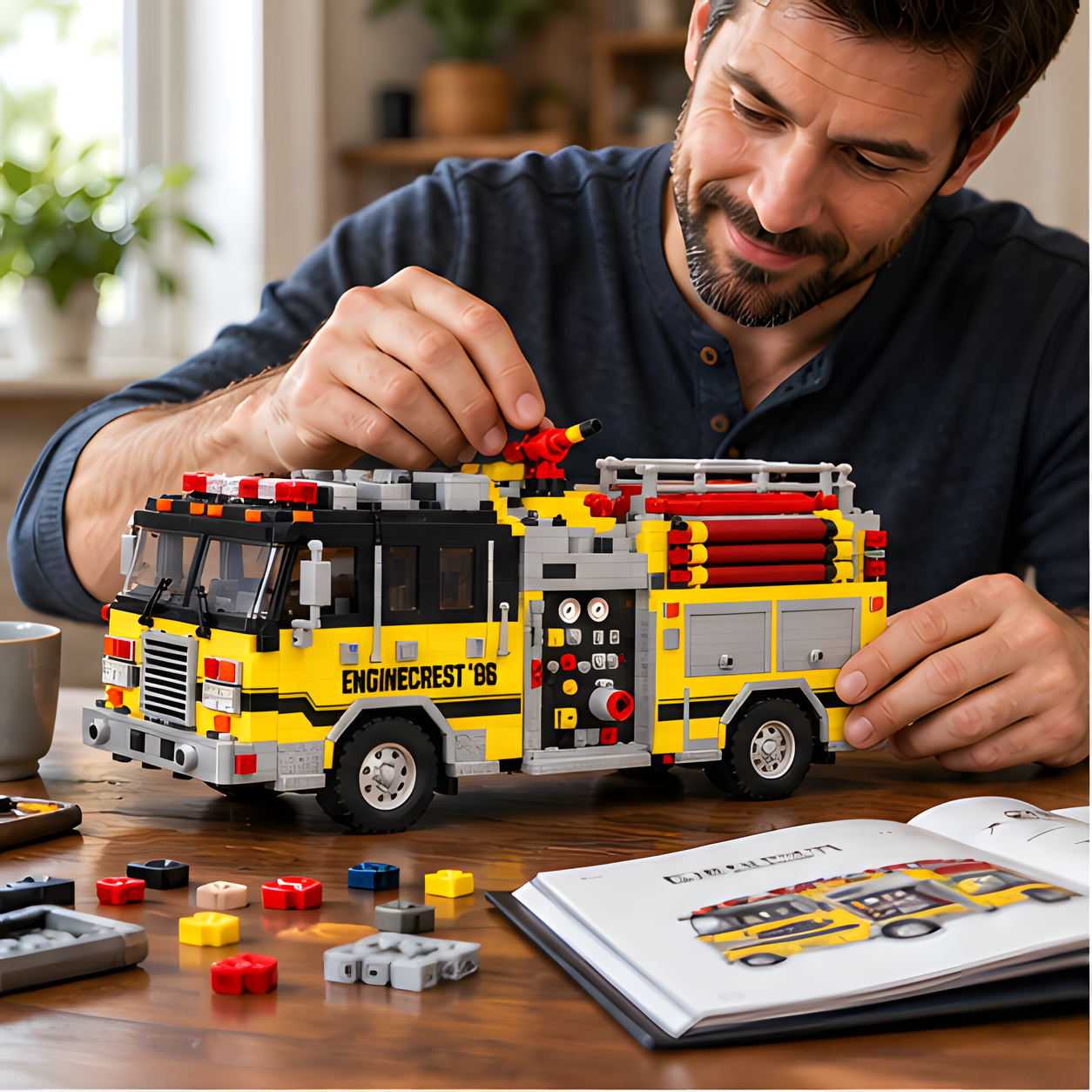
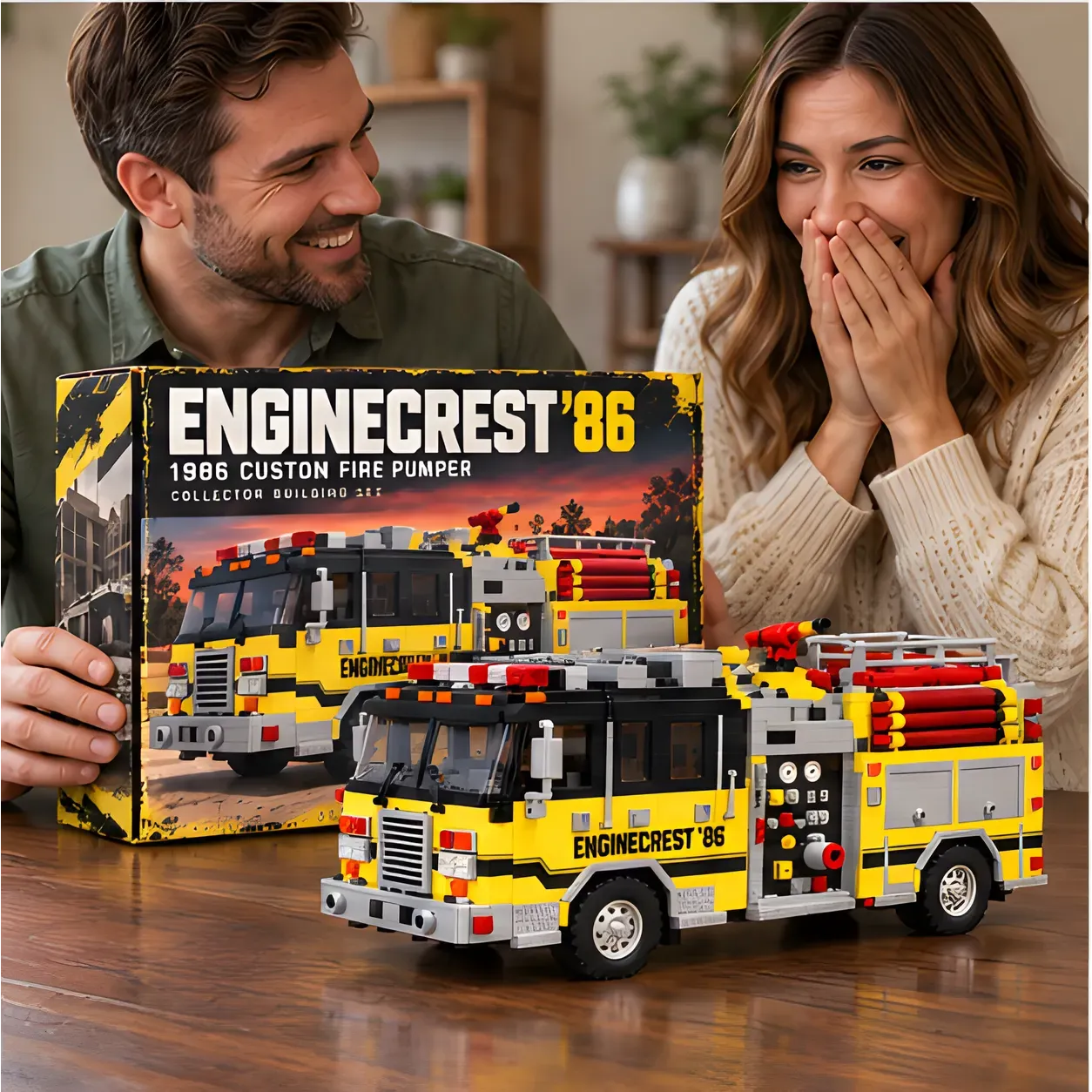
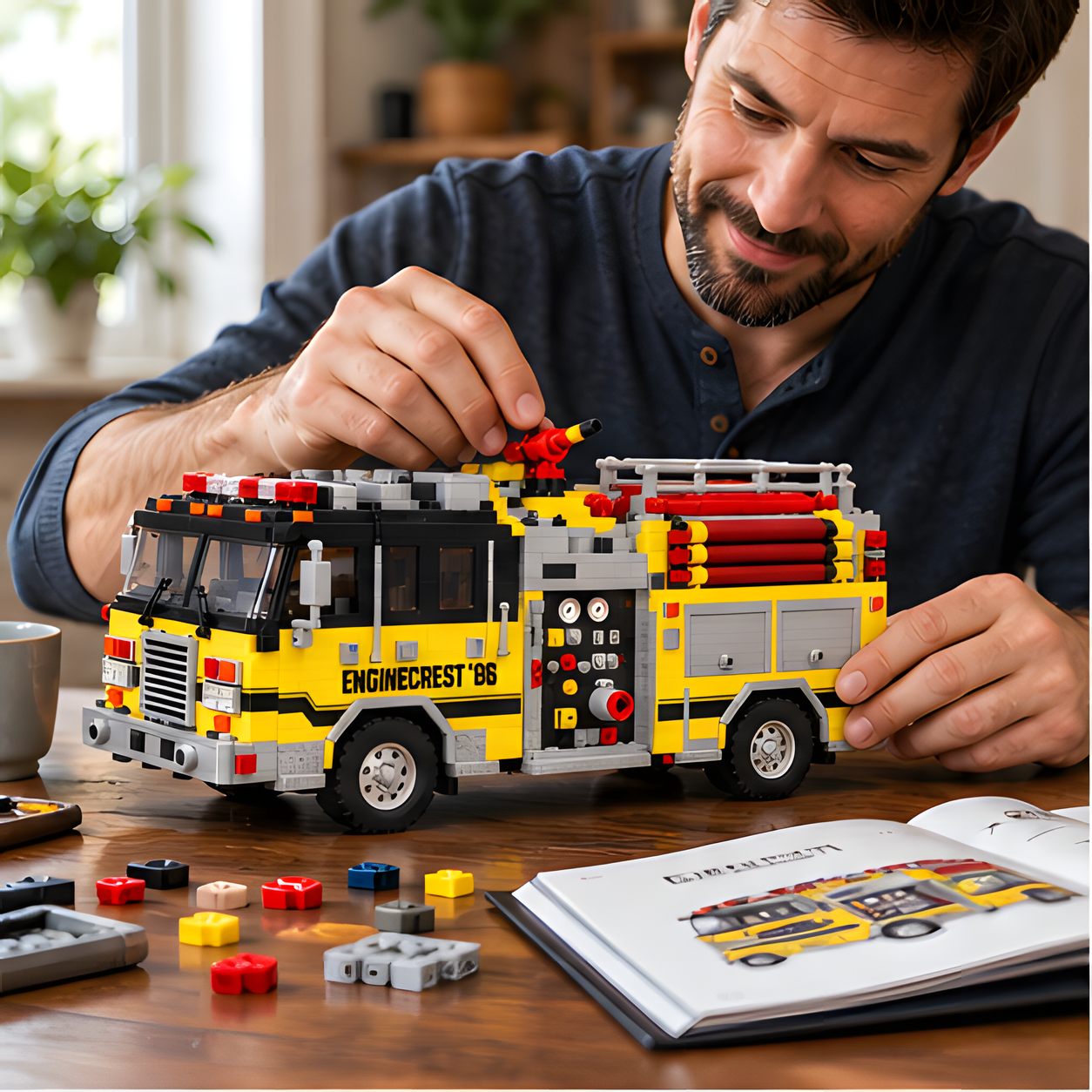
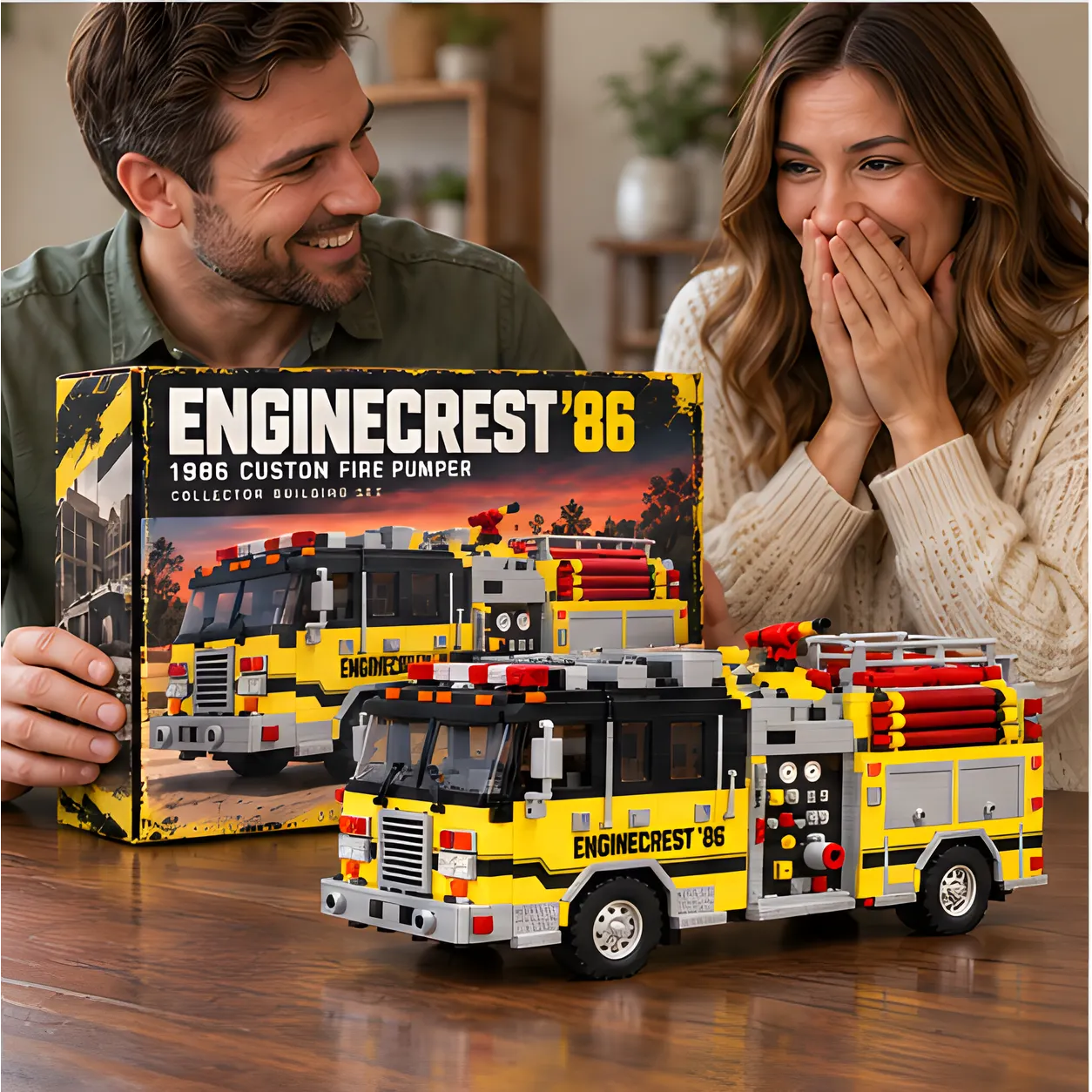
Clear a section of the table and spread out the yellow, black, gray, and red pieces. One person can work through the cab and front grille while another tracks the small gauges, fittings, or hose elements. Compare the shapes as you go, trade sections when one side gets ahead, and keep the conversation moving with the build.
As the cab, equipment body, and red hose section connect, the separate tasks start reading as one fire pumper. Finish the top nozzle assembly and silver rails, take a final look around the truck, and leave it somewhere at home where both of you can point back to the parts you solved together.
The detail you figured out together becomes the detail you notice first later.
Three Ways to Enjoy the Set
Each stage gives the pumper a different reason to matter, from its mechanical-looking controls to its unmistakable safety-yellow color story.
Build the cabover front, then shift to the gauge-filled operator controls where the truck's side becomes noticeably more technical.
The yellow-and-black scheme connects the build to a period when fire-service visibility was a serious design conversation.
Stacked red hose elements, silver rails, and the upper water monitor keep the pumper identifiable from more than one angle.
Working-Rig Details
The front, operator area, and hose section each reflect a different job on a full-size fire engine, which is why these three zones carry so much visual character.
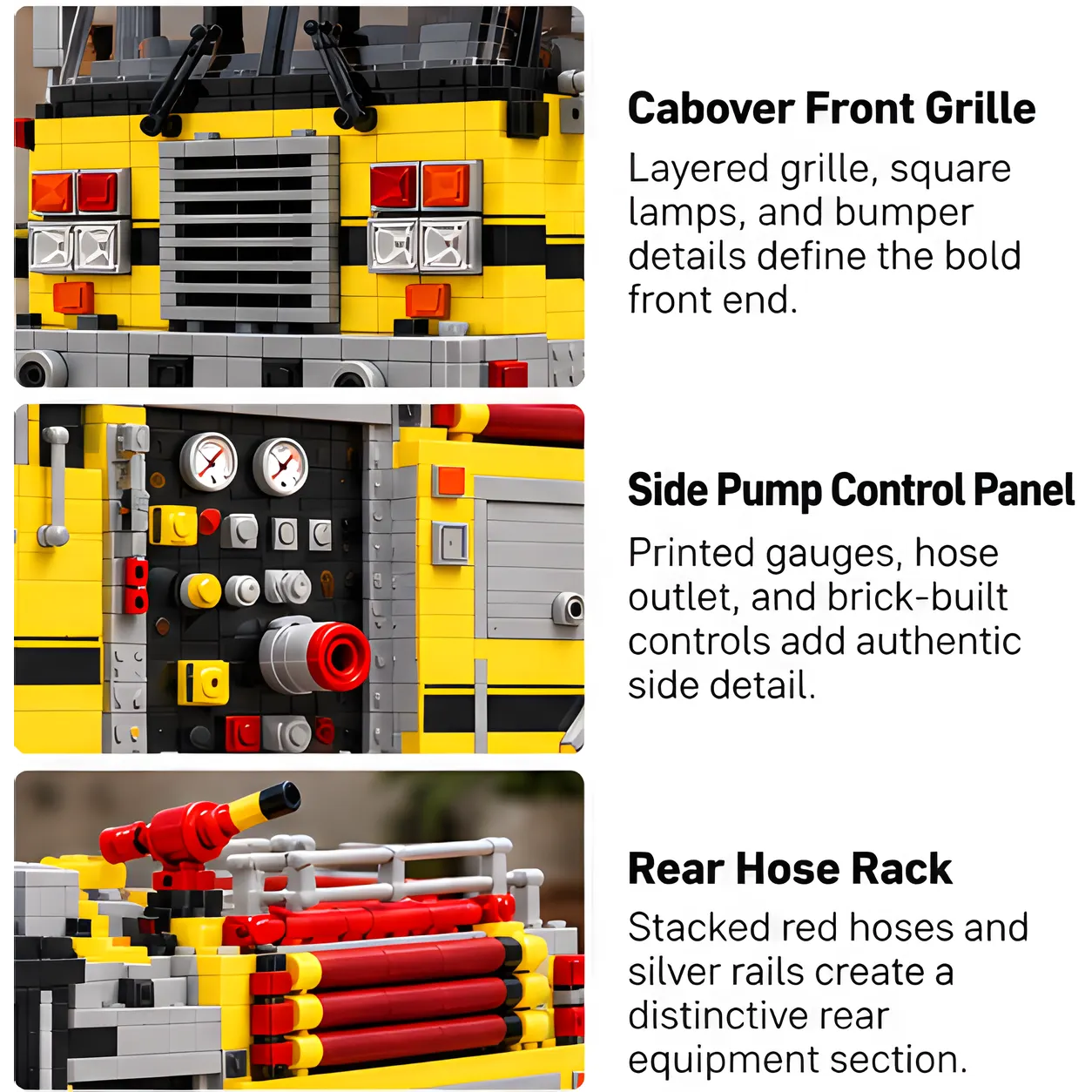
How the Project Changes
The experience moves from broad color blocks to recognizable apparatus hardware, then finishes with the equipment that gives the rear its identity.
Sort the yellow, black, gray, and red pieces so the cab, equipment body, and hose section already feel like separate parts of the project.
The layered front grille, square lamps, and gauge panel turn the first walls and plates into a recognizable 1980s fire-engine profile.
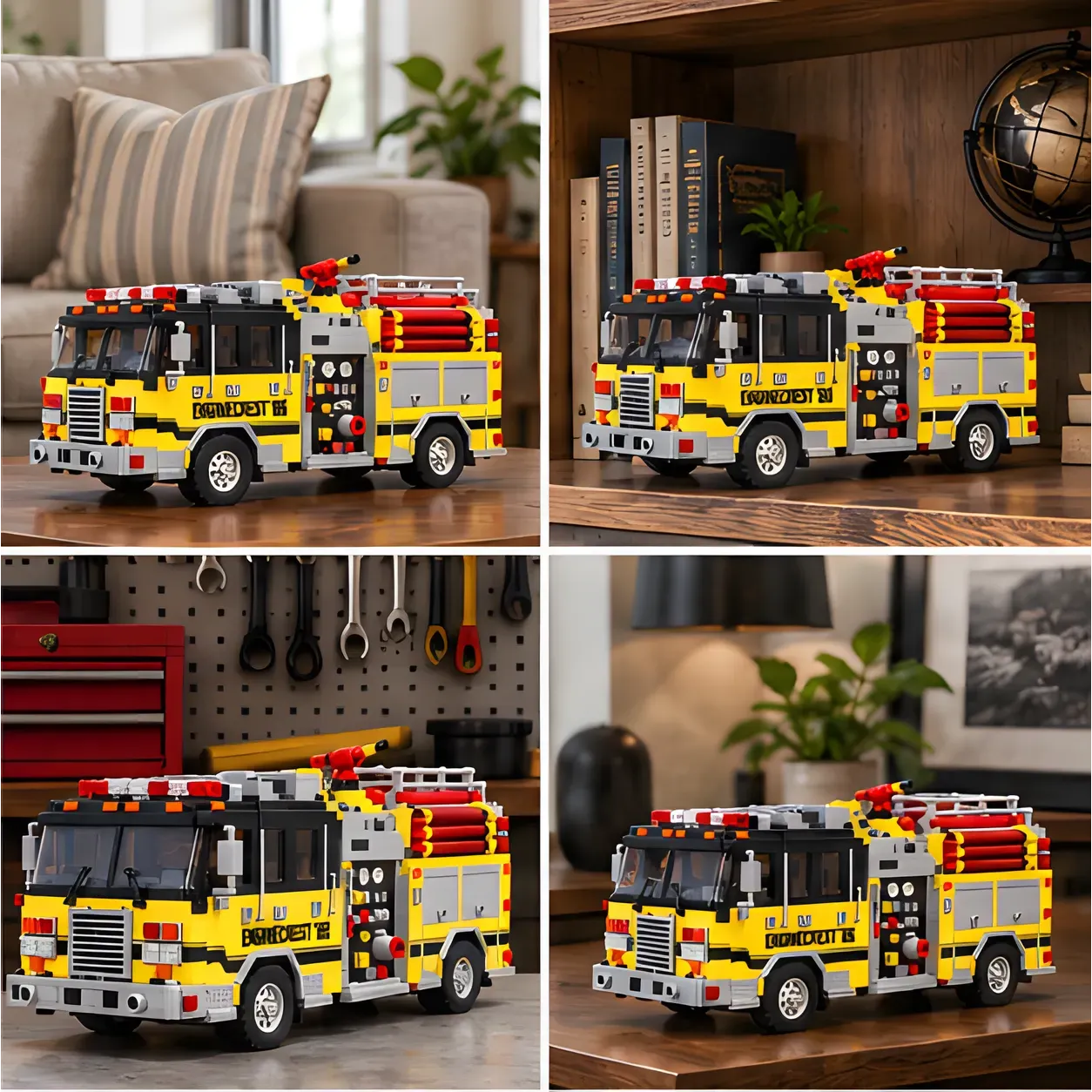
Add the red hose rack, silver rails, and top monitor, then choose a shelf where the bright yellow build can stay visible.
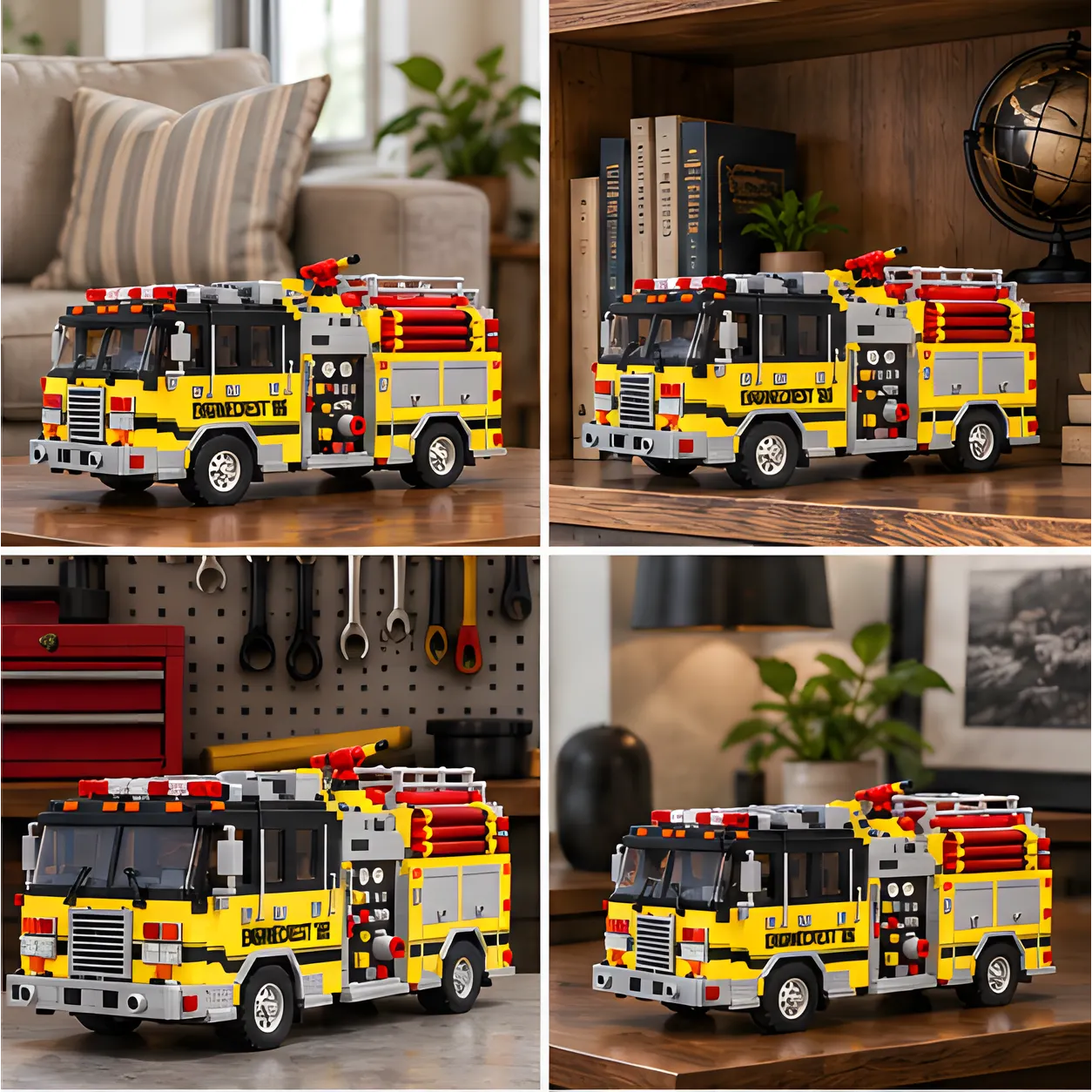
After the Build
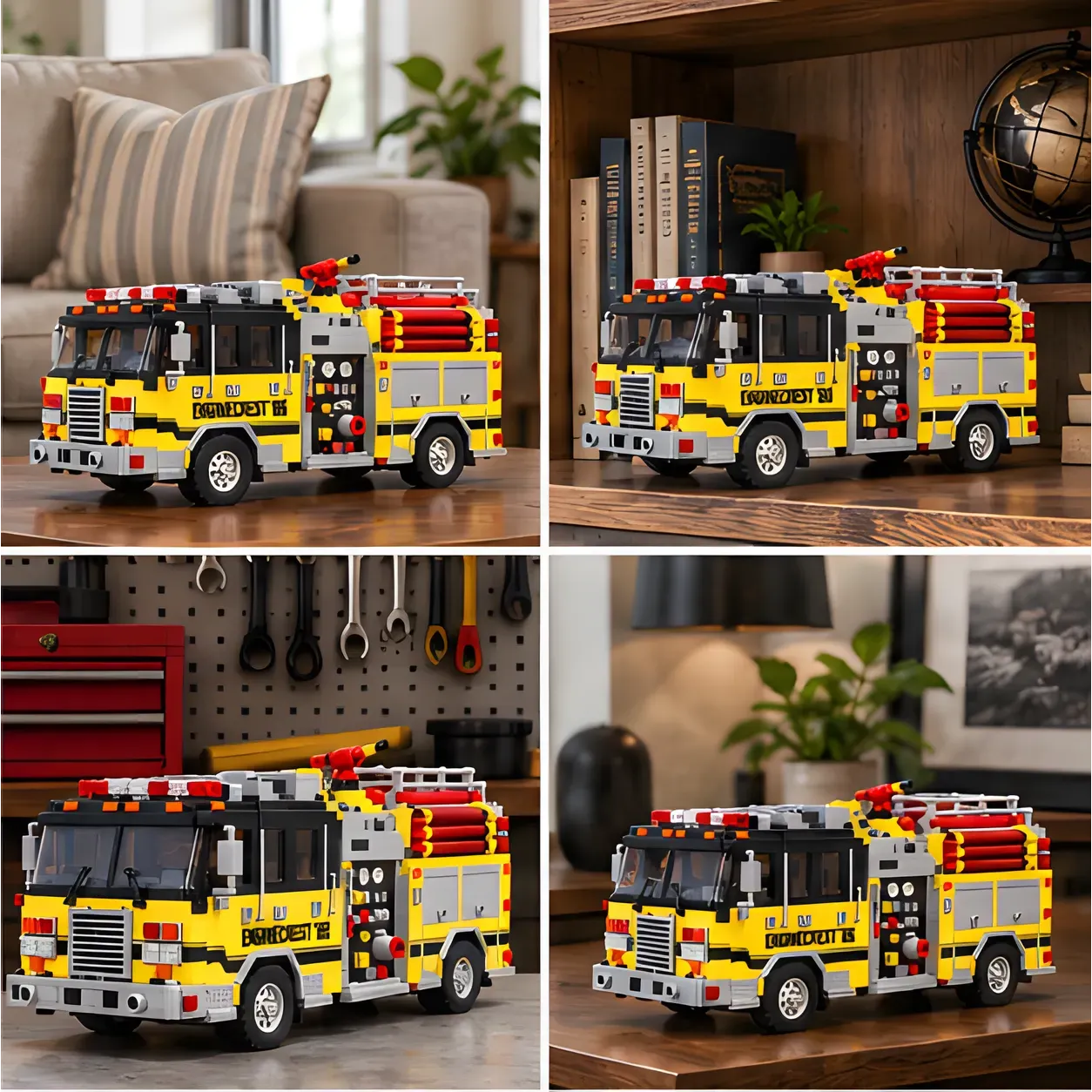
The yellow-and-black cab has enough contrast to read across a room, while the red hose section and silver equipment details reward a closer look. Once finished, it works best where the operator controls and cabover front can both be seen.
Hands on the Table
Set the phone aside and sort the yellow cab pieces, gauge details, and red hose elements across the table. The pace comes from finding, comparing, and placing physical parts—alone or with someone who wants to help.
For Fire-Apparatus Fans
This is a strong fit for adult builders who follow fire-service history, collect working-truck subjects, or have spent time around stations and apparatus. Birthdays, retirements, holidays, and appreciation gifts all make sense because the subject is specific enough to feel chosen.
The value lasts in two stages: first, there is time spent sorting the yellow cab pieces, gauge-panel parts, and red hose elements; then there is a finished brick-built pumper with enough 1980s character to earn a lasting spot on a shelf, desk, or display cabinet.
Build the pumper, then keep the era in view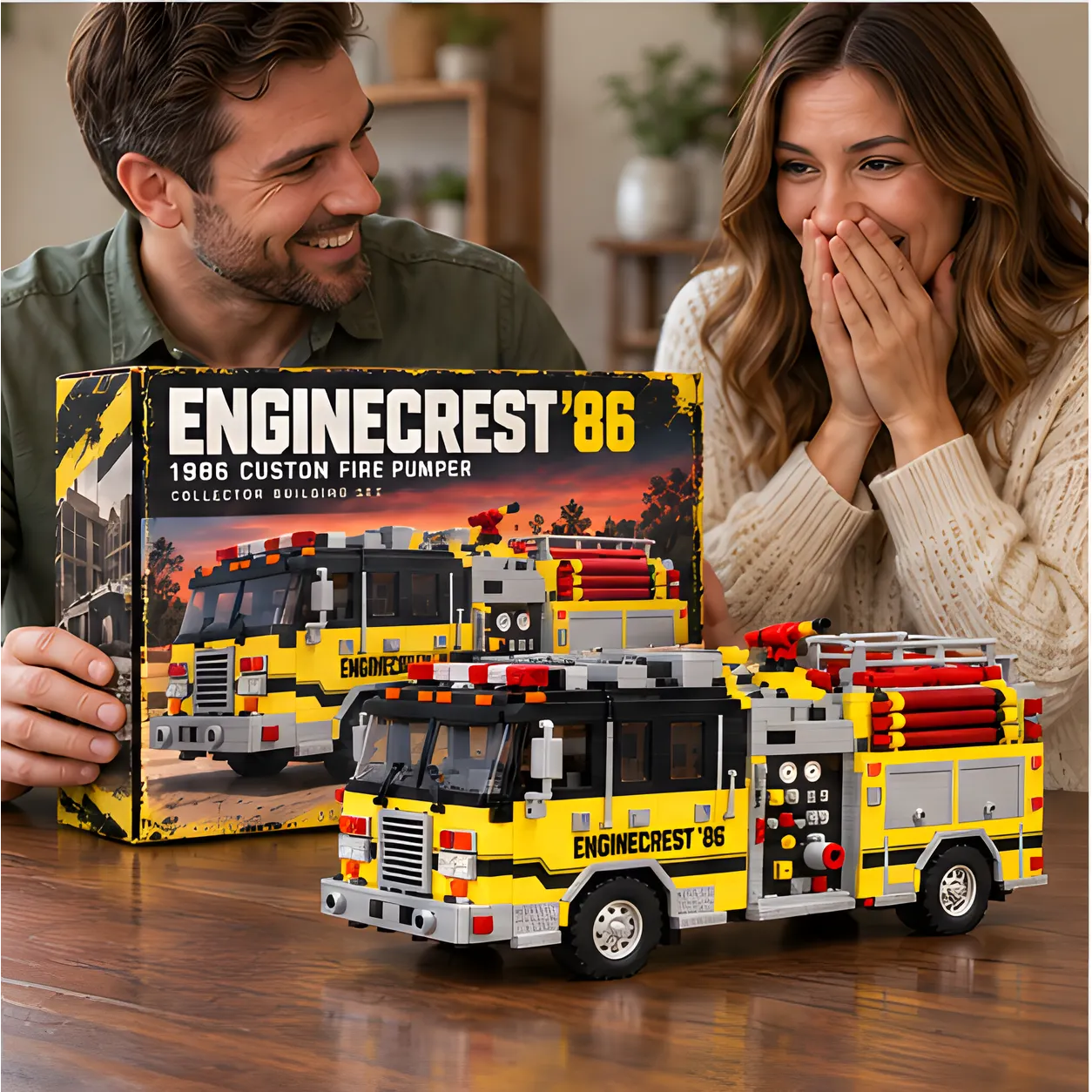
GOOD TO KNOW
It is a building set designed to be assembled piece by piece. The finished result is a brick-built yellow fire pumper.
Look for the squared cabover front, layered grille, square lamps, detailed pump-operator area, stacked red hose section, silver rails, and roof-mounted monitor.
Yes. The strong yellow-and-black cab, red hose storage, and visible side controls give the completed build enough contrast and detail for a shelf, desk, or cabinet.
Yes. You can divide the cab, operator controls, and rear equipment into sections and compare progress as you go. The set contains small parts, so younger children should build only with adult supervision.
It suits adult brick builders, fire-engine enthusiasts, working-truck collectors, current or retired fire-service members, and anyone drawn to distinctive 1980s apparatus.
Yes, it's perfectly compatible with LEGO bricks!
Keep the Era Close
From the squared grille and gauge-filled controls to the red hose section up back, every recognizable detail turns your time at the table into a firehouse-inspired build worth keeping.